
Clinafy
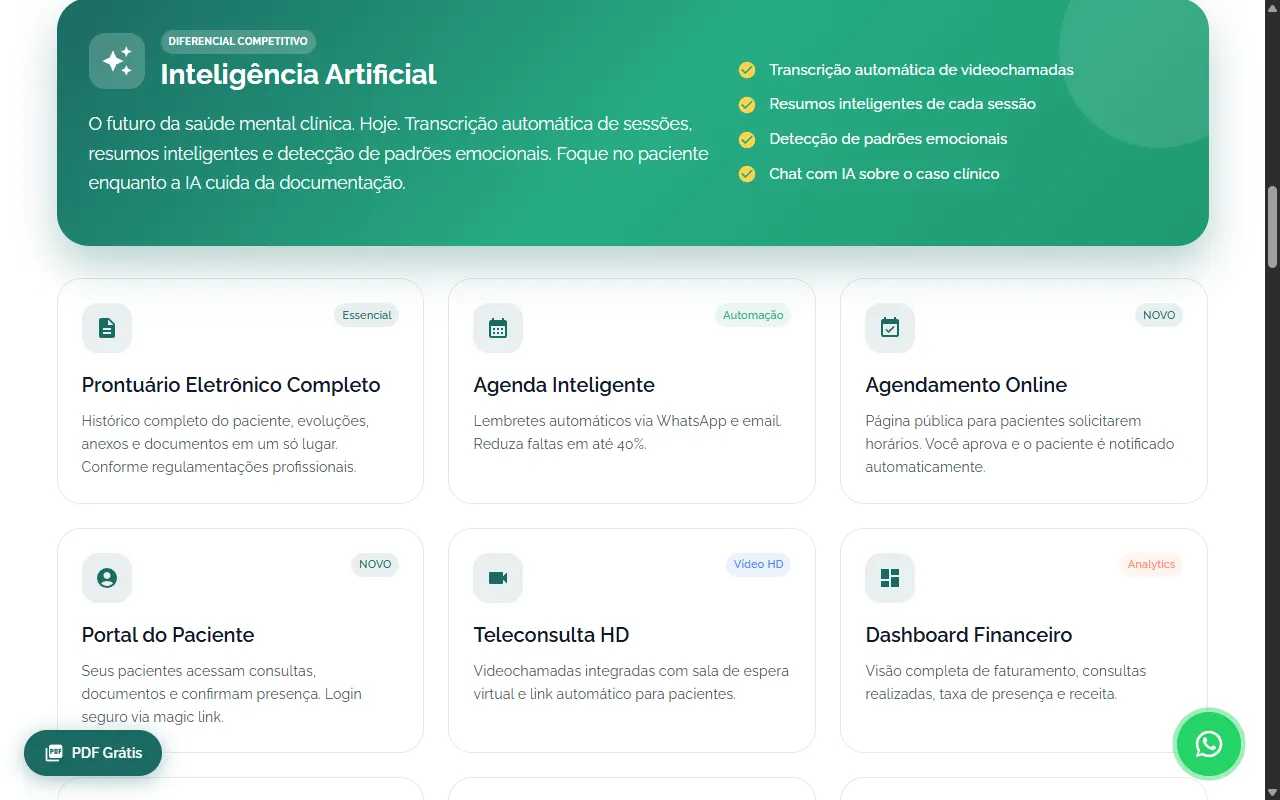
A mental health platform with clinical records, scheduling, telehealth and financial management.
See the Clinafy caseEDevsHub builds SaaS platforms and also evolves existing products. For a first version, the work starts with the user, the problem the product solves and the flow that has to work for them to use it.
Authentication, billing and separation between companies are scope decisions, not a mandatory list for every idea. First we define who uses it, which task they complete and what makes a delivery done. Market validation remains a business question; shipping software does not prove demand.
These are examples of deliverables and acceptance criteria. The proposal defines which ones go into your project and how they will be checked.
Build the task that represents the product’s central value, from the first step to completion.
Acceptance example: A test user completes the task with the defined inputs and rules, including one expected error scenario.
Define the user roles and, if needed, how each organization accesses its data.
Acceptance example: Each role accesses only what was authorized. If there are separate organizations, isolation is verified in the agreed scenarios.
When it is part of the version, connect the product to the provider and represent the states that matter for access.
Acceptance example: The agreed events, such as confirmation and cancellation in a test environment, produce the expected states in the product.
Define the environments, access and materials needed to put the version live and continue the work.
Acceptance example: The version is checked in the planned environment, with the access and documentation specified in the proposal.
From the portfolio
A mental health platform with clinical records, scheduling, telehealth and financial management.
See the Clinafy caseChoose the initial user, the main task and what is explicitly left out of this stage.
Agree on the screens, roles, rules and integrations that support that flow, including the client’s dependencies.
Organize deliveries to check behavior against the agreed criteria and adjust what was contracted.
Prepare the environment and the knowledge transfer according to the scope. New features get their own delivery definition.
You need to be able to explain the problem and who you intend to serve. EDevsHub can help structure the technical scope, but building the product does not replace commercial validation or guarantee sales.
Not necessarily. We need to understand who buys, who uses and which data must be separated. The architecture follows that need and the product’s stage, instead of adding complexity by default.
Yes, if that makes sense for how the first version is used. Billing can come in when the flow needs it. What is left out must be clear so it doesn’t become an implicit expectation.
It can be evaluated. The first step is getting to know the code, the access, the documentation and the dependencies. With that, it is possible to define what can be reused and which changes the next scope requires.
Prefer to hire through Workana? See the profile. If the conversation already started on Workana, send the context in the same chat.
To start the conversation, it helps to gather: