
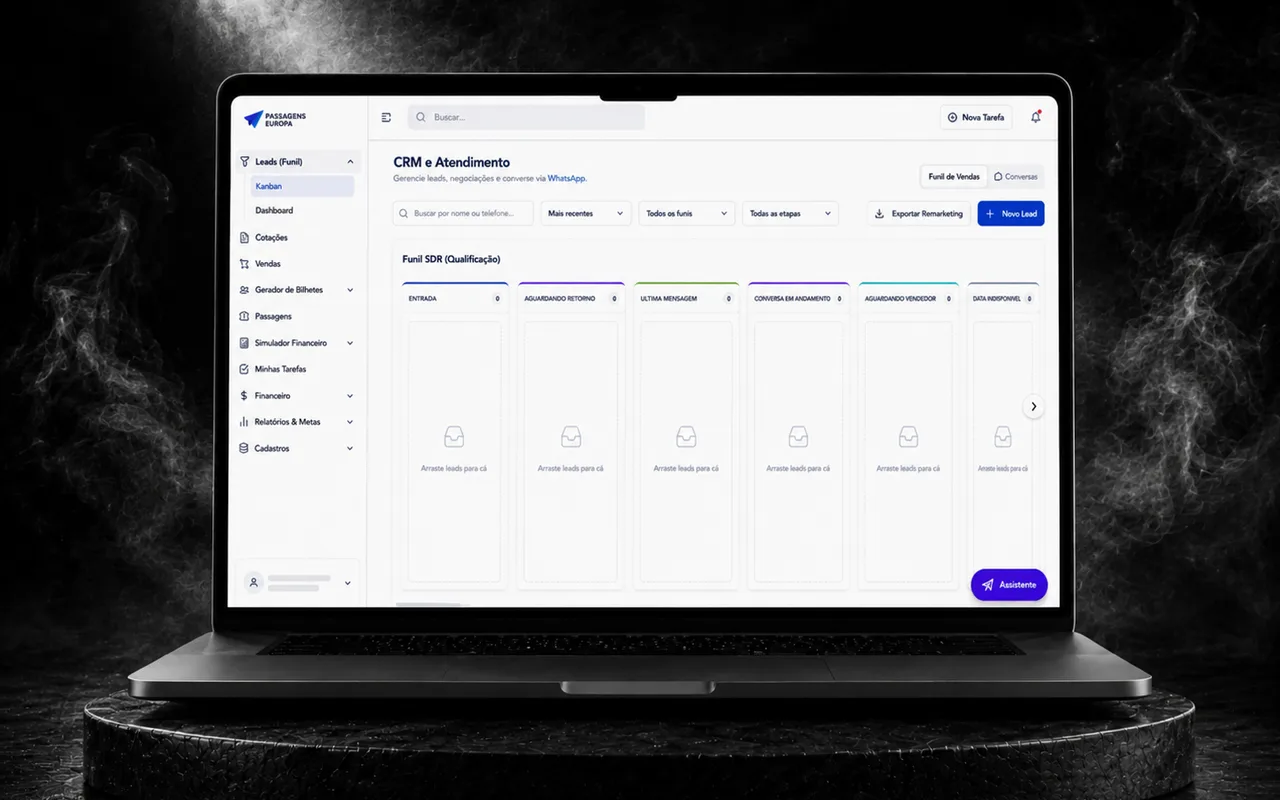
Passagens Europa
A CRM that brings together leads, customer support, quotes, finance and commissions for a sales operation.
See the Passagens Europa caseEDevsHub builds custom management systems, CRMs and dashboards. The starting point is understanding who uses the process, which rules it must follow and what is currently scattered across spreadsheets and tools.
The first decision is the size of the intervention. Sometimes integrating tools or adding a module is enough. When the operation’s rules require an application of its own, the essential flow is separated from the improvements that can wait for another stage. That defines a scope that can be described and validated.
These are examples of deliverables and acceptance criteria. The proposal defines which ones go into your project and how they will be checked.
Represent a sales or operational process, with states, owners and a history of changes.
Acceptance example: An authorized user moves a record between the agreed stages; the system records who changed it and when.
Define what each role can view, create and change, based on the real workflow.
Acceptance example: The allowed actions work for each role; unauthorized operations are also blocked on the server.
Organize the information the team needs to follow pending items and make decisions.
Acceptance example: Filters and totals are checked against a known set of records, including cases with no results.
Plan how existing data comes in and how the system relates to services that stay in use, when that is part of the project.
Acceptance example: A sample is imported and checked; duplicates and invalid data get the agreed treatment.
From the portfolio
A CRM that brings together leads, customer support, quotes, finance and commissions for a sales operation.
See the Passagens Europa caseUnderstand a concrete flow, its users, documents and exceptions. Identify what can already be reused.
Agree on deliverables, permissions, acceptance criteria and dependencies before development.
Show the flow working so it can be checked against real scenarios from the operation.
Check the agreed criteria and carry out the knowledge transfer and release defined in the scope.
Not necessarily. EDevsHub can evaluate an additional module or an integration. The choice depends on the current limitations, the available access and the rule that needs to be met.
Yes. To define the work, we need to know the code, the infrastructure and the problem to solve. That assessment separates the requested change from any technical dependencies.
Importing can be part of the scope. First, the format, quality, volume and matching rules need to be checked. The validation process and who is responsible for checking are agreed in the proposal.
What will be delivered, the documentation, the planned adjustments and any support must be stated in the proposal. Later improvements can be organized as another scope; this page does not assume any support period.
Prefer to hire through Workana? See the profile. If the conversation already started on Workana, send the context in the same chat.
To start the conversation, it helps to gather: